For 152 years, Schuyler Center has been advancing data-driven, effective, public policy to create a more just, equitable New York, in which all residents thrive. The policies and investments we champion are those proven to prevent children and families from experiencing the hardships of poverty, ill-health, food insecurity and other challenges; policies that stand to transform the public systems that serve and support the well-being of New York’s children, families, and communities over the long-term. By those measures, this budget is disappointing, with nearly all of the potentially transformative investments falling out during budget negotiations.
A handful of new investments directed to supporting children and families experiencing poverty are time-limited and not designed with the intention of building toward a significant, sustained reduction in child and family poverty.
This budget cuts funding for the child care workforce, threatening to worsen the state’s already severe child care workforce shortage and capacity shortfall. It does not transform New York’s child welfare system to better support families. And it does not make New York a more affordable place to raise a family.
Failure to invest in policies that are proven to uplift children and families is not just a failure within a budget bill. There are real consequences. These decisions will be felt by the family whose child care program closes due to staff shortages. They will be felt by the child who cannot buy school lunch, by the young person exiting foster care who cannot afford rent, and by the parent struggling to afford the cost of living in New York State.
There are important bright spots. Chief among them: the inclusion of continuous Medicaid and Child Health Plus eligibility for children aged 0-6. Forty-five percent of New York children are covered by Medicaid and Child Health Plus. Eliminating the requirement for the youngest New Yorkers to re-enroll every year will help ensure children’s access to health services in the most critical years of their development. In addition, a 5% rate increase for Early Intervention providers may help stem the systemwide exodus of providers, which has resulted in gaps in services for young children experiencing developmental delays and disabilities.
We celebrate the budget’s addition of state funds to the state child care assistance program to both fill the hole left by the end of federal pandemic funds, and to expand the program. Also welcome is a small – but important – child care subsidy rate hike for providers offering care during evening, early morning, and weekend hours (known as non-traditional hours), and those serving children experiencing homelessness, as well as an increase in funding for continuing a small pilot project to provide child care assistance to families barred by federal rules from accessing child care assistance due to immigration status, or because they work episodic hours.
Schuyler Center’s assessments around specific policy goals are outlined below.
Goal 1: Child Poverty Reduction — Reduce child poverty and racial inequity, starting by ensuring tax credits, housing, and nutritional supports reach all families, no matter where they were born.
Does the FY 2025 New York State budget meet this goal?
No. The final State budget falls short for low-income families. The budget fails to permanently expand New York’s child tax credit or ensure the lowest income children receive the maximum credit; provide housing supports for low-income New Yorkers; or fund statewide universal school meals.
The budget includes a one-time supplemental payment of the Empire State Child Credit that will provide a boost to New York’s low- and middle-income families this fall. While the supplement’s structure is designed to be progressive, it still leaves the lowest-income families out of the full credit and creates significant cliffs as family income rises.
With a nod to extremely high poverty rates in three upstate cities, the Governor and Legislature agreed to a one-time distribution of $50 million to address poverty in Buffalo, Rochester, and Syracuse.
Too many children and families across the state experience the day-to-day hardships of poverty –struggling to afford rent, food, and daily needs. That is a policy choice, and it was made once again in this budget. The clock is ticking on upholding New York’s commitment to reducing child poverty statewide by 50% by 2033. Another year is gone.
Goal 2: Child Care — Make a substantial and sustained investment in New York’s child care workforce and extend the promise of care to all children in our state.
Does the FY 2025 New York State budget meet this goal?
No. This budget includes a reduced investment in the child care workforce compared to last year – a workforce overwhelmingly composed of women- specifically women of color and immigrant women, a workforce that earns less than 96% of other occupations. These cuts come at a moment when child care programs are already operating under capacity, even while carrying waitlists, because of workforce shortages due to low wages.
This budget also missed the opportunity to ensure that parents who work variable hours in retail, the trades, the gig economy, and food service can access child care by ending the State’s practice of tying child care assistance to caretakers’ exact hours of work—known as decoupling. Legislation to end this practice—which has disproportionately kept low-income, immigrant, and Black and brown New York families from accessing child care assistance—was passed by the Legislature last year and vetoed by the Governor, with instructions for the Legislature to take the issue up in budget negotiations. While the Legislature included this proposal in both one-house budgets, it was removed during final negotiations.
Goal 3: Children’s Health — Expand and increase investment in child and family health.
Does the FY 2025 New York State budget meet this goal?
Yes. The final state budget includes authority to seek federal approval for New York to ensure eligible children remain enrolled from birth to age 6 in Medicaid and Child Health Plus (CHP) health coverage — programs which provide no-cost or low-cost health coverage for eligible children.
Continuous health coverage will ensure that the youngest children on Medicaid receive health care during this crucial period of development.
A 5% rate increase for Early Intervention providers, together with a commitment to a 4% rate increase for services in rural and underserved communities, may help stem the systemwide exodus of providers, which has resulted in gaps in services for young children experiencing developmental delays and disabilities.
Goal 4: Child Welfare — Transform the child welfare system by investing in policies that foster transparency and accountability, prevent system-involvement and unnecessary, harmful family separations, reduce institutional placements, and support child, family, and community wellbeing.
Does the FY 2025 New York State budget meet this goal?
No. The final state budget took two small steps towards better supporting young people and families involved in the child welfare system: first, the Foster Youth College Success Initiative (FYCSI) is funded at $121,000 more than last year at $8.3 million, still below the $10 million needed to robustly fund each eligible student. Second, human services programs received a 2.84% COLA, which requires a minimum 1.7% targeted salary increase. This is less than the 3.2% needed to keep up with inflation and leaves out some human services workers (like those working in Preventive Services).
Missing are long overdue investments in Preventive Services and Attorneys for the Child that would strengthen children and families.
Next Steps Toward Investments that Support the Well-Being of New York’s Children and Families
In the two months left of legislative session, we will be working hard to secure passage of a number of laws designed to make the child welfare, child care, and health systems better serve and support families, in a manner that is more just and equitable.
We will also be working with state partners to ensure laws are faithfully implemented and that investments committed in prior years are directed properly. A chief area of focus will be to ensure state leaders are on track to fully attain goals set by the Child Poverty Reduction Act, which committed the state to cutting child poverty in half in a decade with attention to racial equity. We celebrated that law not only for its bold vision, but also because it calls for an advisory council guided by data and evidence to make truly transformative – and lasting – policy recommendations. To date, the recommendations of the council have been largely sidelined. We hope and expect that to change.
Healthy children and supported families are the foundation of a thriving society—these are the investments that pay off for everyone, now and for generations to come. We will continue working for transformative policies that will create a New York State that supports strong families, thriving children, and vibrant communities.
New York’s State Budget Must Prioritize Affordability for Families– Schuyler Center Statement in Response to One-House Budget Bills
As New York families struggle to afford the cost of living, our state leaders have an opportunity to leverage this year’s budget to bolster family economic security statewide.
Schuyler Center is encouraged to see many proposals in the Senate and Assembly budget bills that will support children and families, especially those struggling to make ends meet. We appreciate both houses’ willingness to listen to the solutions necessary to make New York a place where families can afford to put down roots.
The inclusion of investments that will have the biggest impact on those with the lowest incomes must be a priority as the final budget is negotiated. These proposals include robust tax credits, continuous Medicaid coverage for the youngest children, and making child care assistance more accessible to the many parents who work variable hours in retail, the trades, and the gig economy. By uplifting New Yorkers most in need, our leaders can create more opportunities for all children and families to thrive right here in New York.
Among the proposals with the highest potential to cut child poverty statewide and make New York more affordable for families is the Senate’s proposal to create and begin to implement a new refundable tax credit, the Working Families Tax Credit.
Unfortunately, while all three budget proposals commit to maintaining New York’s historic levels of investment in child care assistance, none include a permanent, sustained investment in the child care workforce. This failure threatens to derail all the state’s progress toward stabilizing the sector and making care available for more children and families. [View Schuyler Center’s Policy Priorities for Child and Family Well-Being.]
Budget Investments that Prioritize Child Poverty Reduction
In 2021, the New York State Legislature passed, and Governor Hochul signed, the Child Poverty Reduction Act (CPRA), committing the State to take action to reduce child poverty by 50 percent. Schuyler Center spearheaded passage of this law and continues to hold New York State accountable for upholding that commitment.
Through the CPRA, New York’s leaders have committed to prioritizing budget investments that will do the most for those with the fewest resources. Accomplishing New York’s child poverty reduction goal requires focused budget and policy actions to meaningfully reduce poverty statewide. We are encouraged by several items across the three budget proposals, including:
Robust and inclusive child tax credits – Both the Senate and Assembly budget bills include proposals that would strengthen the state’s refundable tax credits. To combat child poverty and make New York State more affordable for all families, it is critical that the Enacted Budget include a sustained, robust, refundable family-focused tax credit that targets the highest credit to the lowest income-earners (without an income phase-in), and is available to those who file taxes, but do not have a social security number. The Senate’s proposal to create a new Working Families Tax Credit – which combines the existing child tax credit and Earned Income Tax Credit (EITC) – would immediately drive a significantly larger credit to the lowest income New Yorkers, and longer term provide all eligible New Yorkers a greater credit, making New York State a more affordable place to raise a family.
Funding for the Housing Access Voucher Program (HAVP), as advanced in both Senate and Assembly proposals, would create a state-funded voucher. A commitment of $250 million toward HAVP would have a transformative impact by helping families exit or prevent homelessness
The establishment and funding of a permanent, statewide Healthy School Meals for All program, as is proposed in both Houses’ budget bills, must be included in the Enacted Budget. This would provide school breakfast and lunch at no cost to all students in schools participating in the National School Lunch Program – a strategy proven to reduce food insecurity among children and lift families out of poverty.
Investments in Health Equity for the Youngest New Yorkers
Schuyler Center is pleased to see the inclusion of continuous Medicaid and Child Health Plus coverage for children 0-6 included in all three budget proposals. Forty-five percent of New York children are covered by Medicaid and Child Health Plus. Eliminating the requirement for the youngest New Yorkers to re-enroll every year would ensure that those children have continuous access to health services in the most critical years of their development. We applaud the Executive, Senate, and Assembly for recognizing the importance of this initiative.
Helping Families by Solving the Child Care Crisis
Supporting New York’s families requires addressing the crisis of child care access, affordability, and availability. The state must make a substantial and sustained investment in New York’s child care workforce and extend the promise of care to all children in our state.
As a member of theEmpire State Campaign for Child Care, we appreciate the Senate and Assembly including $220 million in additional funds for child care workforce retention grants, bringing the total investment in the workforce to $500 million. While this falls short of the $1.2 billion that is needed, it is a critical investment in the ‘workforce behind the workforce.’ What is needed in the final budget, however, is a commitment to providing workforce supplements on a permanent basis – as recommended in the Senate resolution.
Transforming Child Welfare
The final state budget must transform the child welfare system by investing in policies that foster transparency and accountability, prevent system-involvement and unnecessary, harmful family separations, reduce institutional placements, and support child, family, and community wellbeing. While there was some action toward these goals, several needed investments were left out of all three budget proposals.
Additional investments needed to support youth and families involved in the child welfare system:
Add a cost-of-living adjustment to the child welfare housing subsidy and allow young people up to age 24 to access it.
Fully fund the Foster Youth College Success Initiative (FYSCI) at $10 million – The Senate proposes $8.2 million for FYSCI and the Assembly proposes $8.6 for FYSCI. By increasing funding to $10 million, more foster youth can achieve education success and support.
Fund a flexible 3.2% cost-of-living-adjustment (COLA) for human services, instead of targeting the COLA to non-executive positions, and provide $195 million in funding to restructure and raise rates for mental health services.
Invest $80 million to raise salaries and reduce caseloads for lawyers providing legal representation to children and families in Family Court. While the Senate proposes $20 million in funding for increased salaries, it is not enough; we urge our New York leaders to invest $80 million.
The Governor must advance policies and investments that will be transformative for New York’s children and families while making New York more affordable for all.
Following yesterday’s State of the State address, Schuyler Center for Analysis and Advocacy is encouraged by Governor Hochul’s attention to health equity, youth mental health, maternal and infant health, paid parental and disability leave, and making New York more affordable for families.
We are especially pleased to see that New York is poised to become the next state to provide continuous coverage in Medicaid and Child Health Plus for the youngest New Yorkers through an intent to apply for Section 1115 Medicaid Waiver authority. As supporters of this policy, we recognize that enacting continuous health coverage for children until they reach age six will keep New York on the forefront of protecting and investing in our youngest children and their families.
At a time when families are leaving New York State, the right investments can keep families here: learning, growing, playing, working, and creating a vibrant future for our state.
Unfortunately, many of Governor Hochul’s policies as presented fall short of meeting the great need that exists, and many needed investments went unmentioned.
As advocates for children and families impacted by poverty, we were concerned to hear the Governor use the language of shared austerity when referring to the state’s budget challenges, suggesting that all New Yorkers must tighten their belts. We urge Governor Hochul and legislative leaders to remember that children from working families and historically underinvested communities must not shoulder the burden of inadequately funded services so the State can close budget gaps.
Child and family well-being is the foundation of a thriving society—these are the investments that pay off for everyone, now and for generations to come. The right funding and policies can help us achieve a vision for New York State in which families can not only afford to stay in New York but choose to stay and flourish here.
There are four policy areas that would create fertile ground for child and family well-being, for all New Yorkers. We look forward to seeing substantial, meaningful investments in each of these areas in Governor Hochul’s Executive Budget:
Child Poverty Reduction — New York State must make good on its promise to substantially reduce child poverty and racial inequity throughout the state, starting by ensuring robust tax credits, housing, and nutritional supports reach all families, no matter where they were born.
Affordable, Accessible, Quality Child Care — It is time for substantial and sustained investment in a child care system that works for everyone. Child care costs are too high for most families, while at the same time child care providers are earning wages so low that they often rely on assistance to make ends meet. New York must invest in the child care workforce and extend the promise of care to all children in our state.
Children’s Health — The state must expand and increase investment in child and family health, including in mental and oral health, as well as in health coverage systems to ensure children have consistent, reliable access to health care.
Child Welfare —It’s past time to transform the child welfare system by investing in policies that foster transparency and accountability, prevent system-involvement and unnecessary, harmful family separations, reduce institutional placements, and support child, family, and community well-being.
We are ready to work with Governor Hochul and State Legislators to continue building a New York State that supports family well-being, in which opportunity is accessible to every child, and where families choose to build their futures.
In 2024, the Schuyler Center urges leaders to champion policies that improve the health, well-being, and economic security of New York’s families, children, and communities, and that prioritize New Yorkers who are working hard to make ends meet. New York State must prioritize policies that focus on the more than 730,000 children living in poverty (19% of all New York children), and Black, brown and immigrant New York children and their families. These New Yorkers continue to be among those hardest impacted by the after-effects of the pandemic.
Goal 1: Child Poverty Reduction — Reduce child poverty and racial inequity, starting by ensuring tax credits, housing, and nutritional supports reach all families, no matter where they were born.
Goal 2: Child Care — Make a substantial and sustained investment in New York’s child care workforce and extend the promise of care to all children in our state.
Goal 3: Children’s Health — Expand and increase investment in child and family health.
Goal 4: Child Welfare — Transform the child welfare system by investing in policies that foster transparency and accountability, prevent system-involvement and unnecessary, harmful family separations, reduce institutional placements, and support child, family, and community wellbeing.
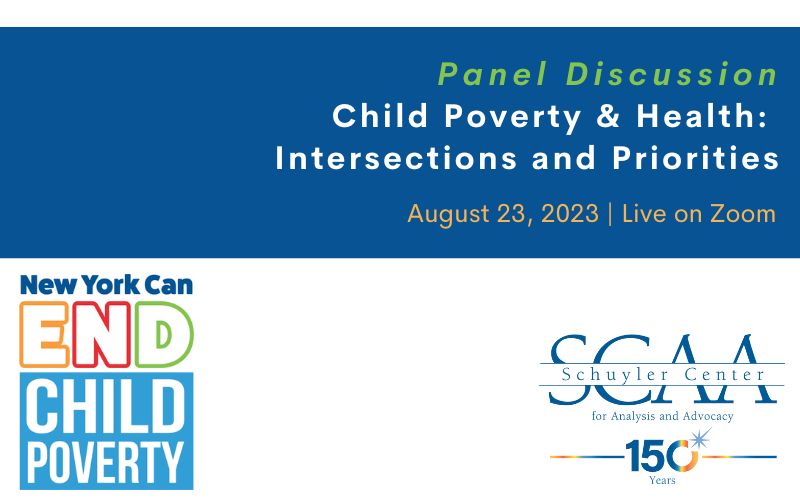
On August 23rd, Schuyler Center hosted the second in our series of panel discussions about child poverty in New York State and its intersections with other issues and policy areas. Entitled Child Poverty & Health: Intersections and Priorities for NYS, the panel featured several experts in the field of health equity and children’s well-being, including Dr. Benard P. Dreyer, Dr. Omolara Uwemedimo, Dr. Jamila Michener, and Kristin Rivera. Kate Breslin, CEO and President of the Schuyler Center, moderated the panel.
For families experiencing poverty, there are many barriers to consistent, quality health care. This discussion with leading child health and policy experts focused on how New York supports health for all children, opportunities for improvement, and recommendations for action that addresses health goals within child poverty reduction efforts.
About the Panelists:
Dr. Benard Dreyer, Pediatrician, NYU Grossman School of Medicine and Bellevue Hospital Center – Dr. Dreyer is a general and Development-Behavioral pediatrician who has spent his professional lifetime serving children and families experiencing poverty. A Professor of Pediatrics at NYU, he leads the Division of Developmental-Behavioral Pediatrics and is Director of Pediatrics at Bellevue Hospital. He is a Past President of the American Academy of Pediatrics (AAP) and is currently serving as the AAP’s Medical Director for Policies. Dr. Dreyer served as a member of the committee that authored the new National Academies of Science, Engineering, and Medicine (NASEM) report “A Roadmap to Reducing Child Poverty”.
Dr. Omolara Uwemedimo, Pediatrician and CEO, Strong Children Wellness – Dr. Omolara Uwemedimo has been a practicing pediatrician for the past 14 years in the United States and internationally in several countries across Latin America, Asia and sub-Saharan Africa. Her perspective on delivery of pediatric care is globally-informed, innovative and unconventional- healthcare can be effectively delivered in non-healthcare settings in the community and must consider not just the child and the disease but also parents, the household, and the larger community. She has served as faculty at Columbia University Medical Center and Cohen Children’s Medical Center, conducting research and training resident physicians in community-engaged pediatrics, social determinants of health and care of global/immigrant populations.
Dr. Jamila Michener, Co-Director, Cornell Center for Health Equity, Cornell University –Dr.Jamila Michener is an Associate professor in the department of Government at Cornell University. Her research focuses on poverty, racial inequality and public policy in the United States. Her recent book, Fragmented Democracy: Medicaid, Federalism and Unequal Politics (Cambridge University Press) examines how Medicaid–the nation’s public health insurance program for people with low income–affects democratic citizenship. Unpacking how federalism transforms Medicaid beneficiaries’ interpretations of government and structures their participation in politics, Fragmented Democracy assesses American political life from the vantage point(s) of those who are living in or near poverty, (disproportionately) Black or Latino, and reliant on a federated government for vital resources.
Kristin Rivera, YPA-C, Regional Youth Partner, Families Together in New York State – Kristin Rivera is a driven, ambitious leader who strives to eliminate barriers in recovery systems. Her passion stems from personal experience living with mental illness and facing difficulties in navigating mental health system during her childhood and into adulthood. Kristin was the first of her family to pursue higher education where she graduated from Binghamton University (SUNY) with degrees in Psychology (B.A.) and Sociocultural Anthropology (B.A.). Before joining Youth Power, Kristin had the privilege of working with youth, young adults, and geriatric communities to assist in educating and empowering individuals on their road to recovery using peer recovery programs, direct care management, and community-based services.
Moderator: Kate Breslin, Schuyler Center President and CEO – With Kate’s leadership, Schuyler Center is building upon its 150-year legacy as a strong, independent voice and coalition-builder. Schuyler Center holds government accountable and helps to shape public debate around policies that affect New Yorkers, with a particular focus on people and communities experiencing poverty and inequity. Kate has spent her career analyzing and advocating in support of thoughtful policy solutions that improve the lives of people in the U.S. and abroad. With Kate at the helm, Schuyler Center led the initiative resulting in New York’s Child Poverty Reduction Act, signed into law in December 2021. Kate plays a leadership role in several statewide coalitions, including Medicaid Matters NY, and she is frequently invited to lead and participate in state and national policy-focused initiatives and workgroups.
Upcoming Discussions This panel was the second in Schuyler Center’s series of panels exploring the intersections of child poverty and other policy areas, including early childhood, health, and child welfare.
Keep an eye out for information about our September panel, which will be held in-person in Albany.
Schuyler Center’s Last Look is our initial assessment of the enacted State budget and how it advances priorities that improve the health and well-being of all New Yorkers, especially children and families living in poverty.
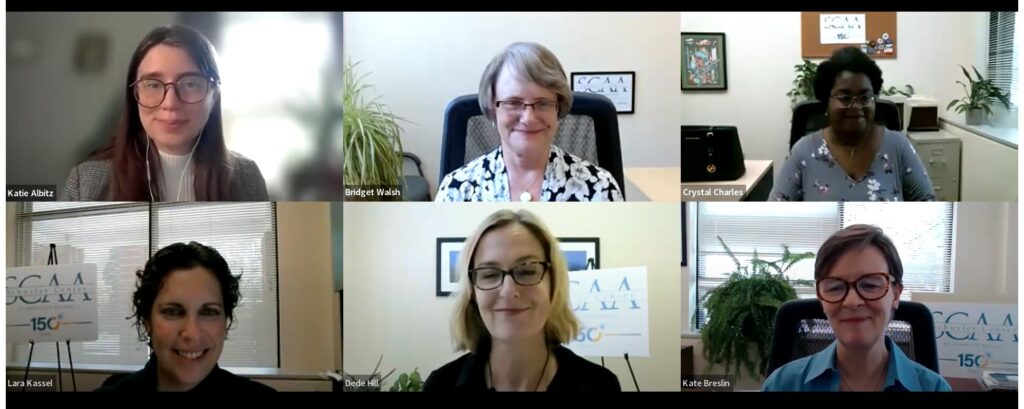
During the Last Look Live webinar held on May 9, Schuyler Center’s Policy Team provided an overview of budget actions related to our policy priorities.
Kate Breslin discussed child poverty reduction measures, Crystal Charles gave an overview of child welfare investments, Katie Albitz provided an update on budget actions related to child care, and Lara Kassel and Bridget Walsh discussed investments in health and well-being. Dede Hill highlighted additional Schuyler Center policy priorities for the remainder of this legislative session.

Recent Comments